Brown Skin, Bold Colours: How We Photograph South Asian Weddings So Everyone Looks Their Best
Here's something that shouldn't need saying but does: brown skin is beautiful. It doesn't need "fixing," "brightening," or digitally altering to meet European beauty standards. It needs to be photographed properly—with understanding, skill, and respect for how different skin tones interact with light, colour, and camera sensors.
After years photographing Hindu weddings in Leicester, Muslim celebrations in Birmingham, and Sikh ceremonies across Manchester and London, we've developed specific technical expertise in photographing South Asian weddings. Not just understanding cultural traditions, but mastering the technical challenges of capturing diverse brown skin tones beautifully whilst managing the vibrant colours—deep reds, brilliant golds, rich greens—that define these celebrations.
This isn't just technical photography knowledge. It's about ensuring that every person at your wedding—from the lightest to the darkest skin tone, from the youngest cousin to the eldest grandmother—looks genuinely beautiful in your wedding photographs. Not "fixed" in editing, but properly photographed from the start.
Why Mainstream Wedding Photography Fails Brown Skin
Most wedding photography is developed around European aesthetics. The lighting setups, the exposure decisions, the editing workflows—they're optimised for white skin, which reflects light differently than brown skin. This isn't conscious racism necessarily, but it's a technical bias built into how many photographers learn and work.
The result? At South Asian weddings photographed by people without specific expertise, you often see problems: darker-skinned relatives rendered too dark, losing facial detail in shadows. Lighter-skinned family members overexposed, looking washed out. Inconsistent skin tones across the same photo—some people look natural whilst others look grey or oddly tinted.
We've seen wedding albums from Birmingham or Leicester where the bride looks beautiful but her darker-skinned sister appears underexposed and muddy. Or where the groom's lighter-skinned mother is properly exposed but his darker-skinned father is lost in shadows. This happens because the photographer exposed for one skin tone and everyone else suffered.
Brown skin spans enormous ranges—from very light beige to very dark brown, with undertones varying from warm golden to cool olive. At Pakistani weddings in Manchester or Gujarati celebrations in Harrow, we might have fifty different skin tones in one family photo. Standard wedding photography approaches, which assume relatively uniform skin tones, simply don't work.
The Technical Reality of Photographing Diverse Skin Tones
Darker skin requires different exposure decisions than lighter skin. It absorbs more light rather than reflecting it, which means if you expose for lighter skin tones, darker skin will be underexposed. If you expose for darker skin, lighter tones can blow out.
At Hindu weddings in Coventry or Muslim celebrations in Birmingham, we're constantly making micro-adjustments. For group photos with diverse skin tones, we're exposing for the mid-range, ensuring darker-skinned relatives retain facial detail whilst lighter-skinned family members don't overexpose. This requires understanding exactly how much latitude our camera sensors have and where to set exposure to protect both ends of the tonal range.
We're also managing lighting carefully. Flash can create harsh highlights on darker skin, making it look shiny or unnatural. But insufficient light leaves darker skin tones muddy and indistinct. The balance requires technical precision that many wedding photographers simply haven't developed because they're not regularly photographing diverse skin tones.
During ceremonies at Sikh gurdwaras in Southall or Bengali weddings in Tower Hamlets, lighting varies wildly—bright outdoor light, dim indoor spaces, mixed artificial lighting. We're adjusting constantly to ensure all skin tones remain properly exposed regardless of lighting conditions. This isn't automatic. It requires active, informed decision-making throughout the day.
The Bold Colour Challenge
South Asian weddings feature colours that white-focused wedding photography isn't designed to handle. Deep reds, vibrant golds, rich greens, brilliant pinks—colours saturated beyond what you typically see at white weddings, which tend towards pastels and neutrals.
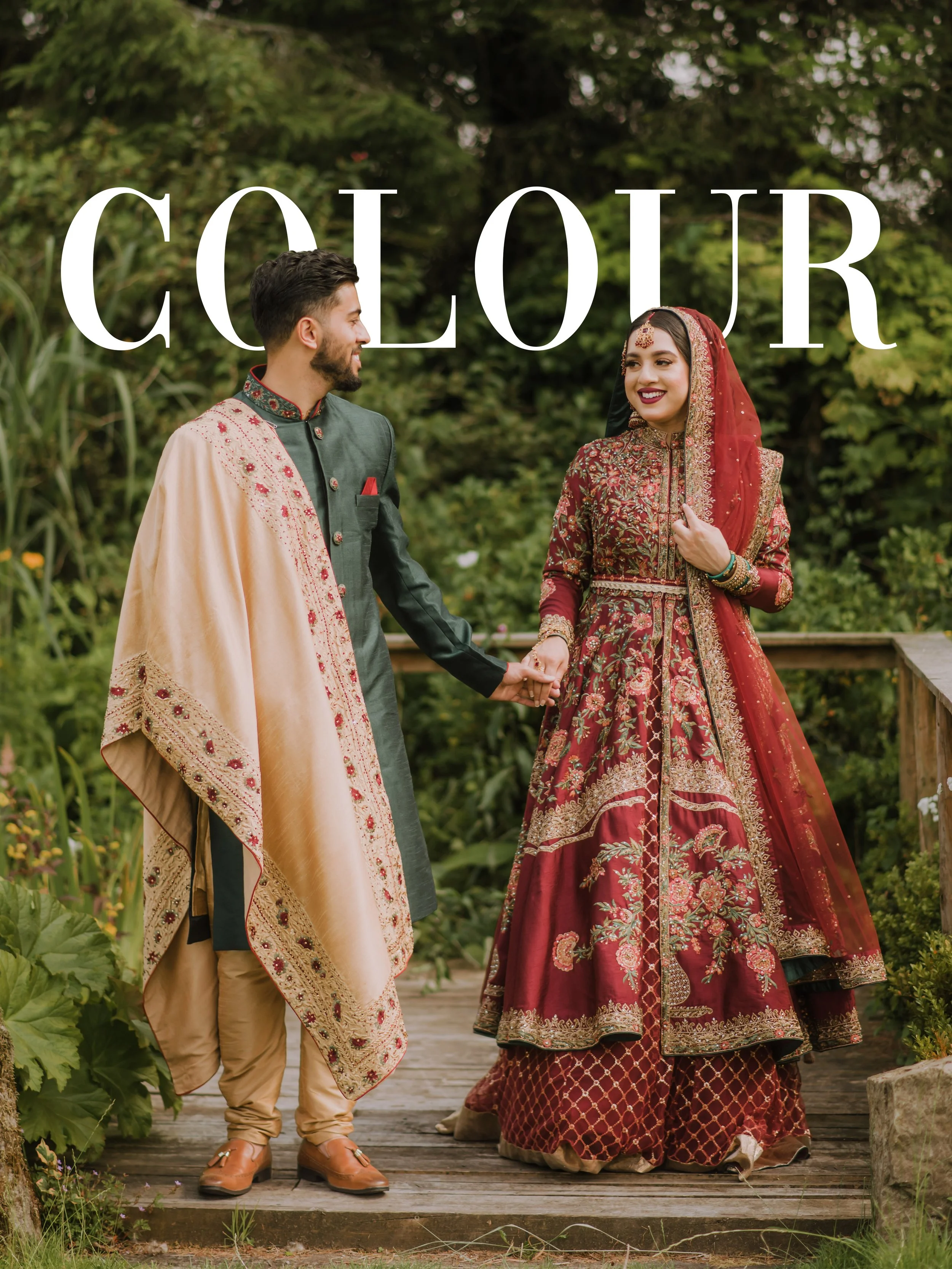
These bold colours interact with brown skin in specific ways. A bride in a deep red lehenga with medium-brown skin creates colour relationships that require different editing approaches than a white bride in a white dress. The red needs to stay rich without overwhelming the skin tone. The skin needs to look natural without appearing washed out against the vibrant fabric.
At Pakistani weddings in Bradford or Punjabi celebrations in Birmingham, we're managing these colour relationships constantly. The gold embroidery that catches light, the jewel-toned saris, the brilliantly coloured sherwanis—all need to photograph richly whilst ensuring people's skin tones remain natural and beautiful.
Many photographers solve this by desaturating colours, making them less vibrant to avoid technical challenges. You've probably seen South Asian wedding photos where the colours look muted, almost pastel. That's not artistic choice—it's technical limitation. The photographer couldn't manage bold colours alongside diverse skin tones, so they reduced the colours to simplify the problem.
We refuse to do this. The vibrant colours are part of why South Asian weddings are visually stunning. Our job is mastering the technical skills to preserve those colours whilst ensuring everyone's skin tone looks natural and beautiful.
White Balance and Brown Skin
White balance—the camera setting that ensures colours look accurate—becomes critically important with brown skin. Incorrect white balance makes brown skin look grey, orange, or oddly tinted. It's particularly problematic in mixed lighting situations, which are constant at Asian weddings.
A Hindu ceremony in Leicester might involve natural light from windows, tungsten bulbs overhead, and the warm glow from the sacred fire. These different light sources have different colour temperatures, and getting white balance right for brown skin in these conditions requires both technical knowledge and experience.
Muslim weddings in Manchester mosques, Sikh ceremonies in Birmingham gurdwaras, Bengali celebrations in East London venues—each presents specific white balance challenges. We're not just setting white balance once and forgetting it. We're adjusting constantly as lighting changes, ensuring brown skin always looks its proper warm, natural colour rather than grey or strangely tinted.
This is another area where lack of experience with brown skin shows in wedding photography. We've seen albums where skin tones shift wildly between photos—appearing properly warm in one image, oddly grey in the next, strangely orange in another. This inconsistency comes from photographers who don't understand how to manage white balance for diverse brown skin tones.
The Editing That Honours Brown Skin
Our film-inspired editing aesthetic serves brown skin particularly well. We're enhancing warm, golden tones rather than pursuing the cool, desaturated looks that dominate contemporary wedding photography. Brown skin looks beautiful with warmth—it's how we naturally perceive it, and our editing honours that reality.
We're also protecting skin texture. Darker brown skin shows texture more visibly than lighter skin, which some photographers "solve" by smoothing skin digitally until it looks plastic. We don't do this. Skin texture is natural and beautiful, and our editing preserves it whilst ensuring overall skin tone looks warm and properly exposed.
At Pakistani weddings across Birmingham or Gujarati celebrations in Harrow, we're editing each photo with attention to skin tone accuracy. Not applying one-size-fits-all presets that might work for white skin but render brown skin poorly. Each image gets individual attention to ensure everyone—regardless of skin tone—looks their best.
This takes longer than automated editing workflows. It requires more skill and attention. But it's non-negotiable for us because we refuse to deliver wedding albums where some family members look beautiful and others look poorly represented simply because their skin tone is darker.
Practical Examples: What This Looks Like
At a Hindu wedding in Leicester, the bride had medium-brown skin, her sister was darker, and her mother was lighter. During family photos, we exposed for the mid-tone (the bride), used fill flash to ensure the sister's darker skin retained facial detail, and positioned the lighter-skinned mother slightly angled to prevent overexposure. The resulting images show all three women beautifully, with natural, consistent skin tones.
At a Pakistani Muslim wedding in Manchester, the groom was quite dark-skinned whilst many of his relatives were lighter. During the nikah ceremony, available light was limited. We exposed to protect his skin tone specifically, knowing we could recover lighter tones in editing but couldn't recover lost detail in darker skin. The photographs show everyone clearly, with the groom looking as he actually looks—rich, dark brown skin properly exposed and beautiful.
At a Sikh wedding in Birmingham, we photographed guests spanning the full range of South Asian skin tones. In group photos, we used soft, even lighting that didn't create harsh highlights on any skin tone, exposed for mid-range tones, and edited individually to ensure everyone from lightest to darkest looked natural and properly exposed.
These technical decisions are invisible to couples when they work correctly. You just see wedding photos where everyone looks good. But when photographers lack this expertise, the problems are immediately visible—family members lost in shadows, inconsistent skin tones, relatives who look "wrong" in ways they can't quite articulate but absolutely notice.
Why This Expertise Matters
Your wedding photos will be seen by your family for generations. Your darker-skinned grandmother shouldn't appear muddy and underexposed whilst lighter-skinned relatives look perfect. Your darker-skinned siblings shouldn't lose facial detail in shadows whilst you're properly lit. Everyone deserves to look their best in your wedding photographs, regardless of where they fall on the spectrum of brown skin tones.
This requires photographers with specific technical expertise in photographing diverse skin tones. It's not something that automatically comes with general photography skill. It requires intentional learning, consistent practice, and genuine commitment to ensuring all skin tones are represented beautifully.
At Mirage Photos UK, we've developed this expertise specifically because we photograph South Asian weddings constantly. We understand the technical challenges. We've mastered the exposure decisions, the lighting approaches, the editing techniques that ensure everyone looks their natural, beautiful best.
What We Don't Do
We don't lighten skin tones in editing. Ever. This is non-negotiable. If someone wants their skin digitally lightened to appear less brown, we refuse. This isn't about being difficult—it's about refusing to participate in colourism that suggests lighter brown skin is more beautiful than darker brown skin.
We don't smooth skin texture excessively. Brown skin, particularly darker brown skin, shows texture more visibly. This isn't a flaw requiring correction. It's natural reality that our editing preserves whilst ensuring overall skin tone looks beautiful.
We don't apply trendy editing that makes brown skin look grey or ashen. Current wedding photography trends favour cool, desaturated looks that simply don't work for brown skin. We edit for timeless warmth that honours how brown skin actually looks.
We don't expose only for the couple whilst letting darker-skinned relatives fall into shadow. Everyone at your wedding deserves proper exposure, regardless of their specific skin tone.
Why South Asian Weddings Need This Expertise
White weddings photographed by people without diverse skin tone expertise might turn out fine because everyone's skin tone is relatively similar. South Asian weddings don't have that luxury—the skin tone diversity is usually substantial, spanning multiple shades within single families.
This diversity is beautiful, but it requires specific technical competency to photograph well. At Hindu weddings in Leicester, Muslim celebrations in Birmingham, Sikh ceremonies in Manchester, or any South Asian wedding across London and beyond, we bring expertise specifically developed for these celebrations.
We understand that your aunt with darker skin deserves the same photographic care as your lighter-skinned cousin. We know that your grandmother's deep brown skin is beautiful and should be photographed to show that beauty, not "corrected" toward lighter tones. We recognise that the vibrant colours defining South Asian weddings should be preserved, not desaturated to simplify technical challenges.
What This Means for Your Wedding
When you hire Mirage Photos UK, you're hiring photographers who've spent years mastering the technical skills required to photograph diverse brown skin tones beautifully. You're choosing people who understand that South Asian weddings present specific challenges that mainstream wedding photography isn't designed to handle.
Your wedding album will show every family member—from lightest to darkest skin tone—looking their natural, beautiful best. Your vibrant colours will be preserved, not muted. Your skin tones will look warm and properly exposed, not grey or strangely tinted.
This expertise isn't common. Many photographers, even good ones, simply haven't developed these specific skills because they don't regularly photograph diverse skin tones. We have, because South Asian weddings are what we do.
Whether you're planning a Hindu wedding in Leicester, a Muslim celebration in Birmingham, a Sikh ceremony in Manchester, or any South Asian wedding across London and beyond, you deserve photographers who can photograph brown skin beautifully—in all its diverse, gorgeous reality.
That's what we do. That's the expertise we bring. And that's why everyone at your wedding, regardless of their specific skin tone, will look their genuine, beautiful best in your photographs.